New format
Does paid search affect SEO?
Short answer: paid search doesn’t buy organic ranks directly. Yandex and Google don’t lift a site in the organic SERP because you run ads.
Indirectly the channels connect: you gather demand and semantics faster, strengthen the brand, and test landings. Below — myths, real ties, and how to use both channels without the illusion that ads equal SEO — and without fake-engagement schemes.
Myths: “bought ads — bought/lost rankings”
Myth 1: “If you pay, you won’t get into organic.” False: blocks differ; a Direct/Ads budget doesn’t cancel the right to organic visibility.
Myth 2: “Ads give a ranking privilege.” Also false as a direct rule. Don’t build SEO strategy on the fact that ads are shown.
Remember:
- payment ≠ organic rank
- stopping ads ≠ SEO drop by itself
- site quality and demand decide more than an advertiser checkbox
No direct effect — indirect yes
There’s no direct mechanism “bid → +N organic spots.” Indirectly paid search helps business and marketing: fast traffic, offer tests, collecting converting queries, awareness.
If the landing is weak, ad traffic brings bounces and expensive CPA — a signal to fix the site, not proof you need to fake behavior.
Useful indirect effects:
- learn working keywords and negatives faster
- test headlines and the first screen
- strengthen brand and brand-query share
- cover demand while organic ramps up
Data: semantics, landings, analytics
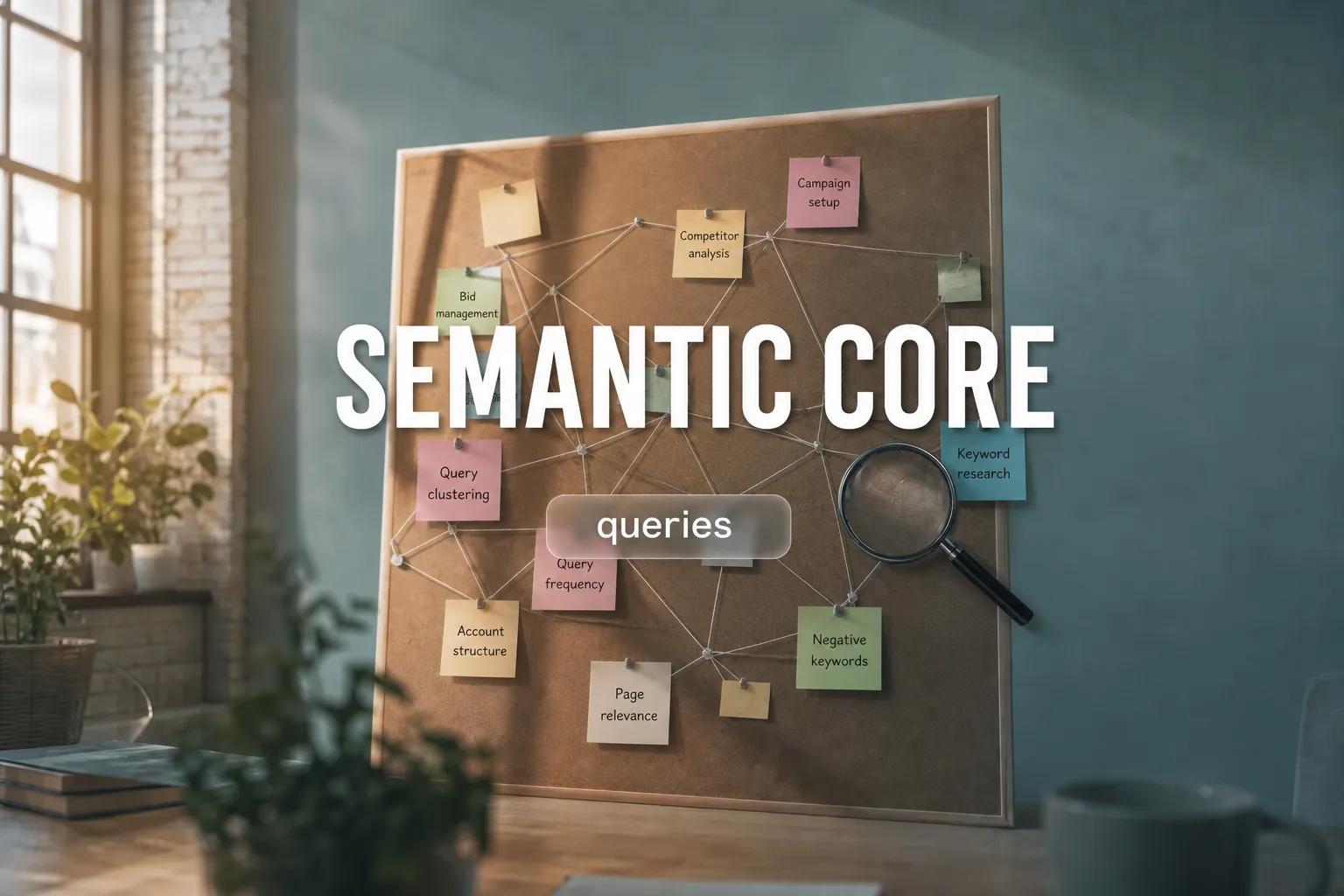
From Direct / Google Ads accounts, pull the phrasing that brought leads and expensive clicks that went nowhere — live demand for the SEO keyword set and negative keywords. Cross-check landings: what converts in ads, strengthen in organic search.
Shared goals in Yandex Metrica / Google Analytics, UTM, and full-funnel analytics show channel contribution without “who brought the lead” fights. Compare CPA and lead quality — not only ranks.
Channel join:
- shared keyword set + different accents
- same goals and call tracking
- ad hypotheses → SEO page fixes
- report: organic vs paid by leads
Indexing and warming young URLs
Ads can bring first people to a new URL faster than organic. That doesn’t replace a sitemap, internal links, and a recrawl request in Search Console / Webmaster.
For a young site, paid search often covers cash at the start. In parallel prep tech and content: over distance SEO usually costs less per lead, but rank buildup is planned and long.
Parallel start:
- paid — fast leads and tests
- SEO — structure, copy, commercial signals
- don’t wait for page one while turning ads off on hope
- don’t confuse click spend with a content budget
How to use them together without illusions
Keep both channels in one strategy: ads own speed and tests, SEO owns durable demand. Improve the site so both paid and free visits convert.
Don’t promise yourself that spending budget will pull organic by itself. Organic grows from pages, demand, and trust; ads only speed up feedback.
Working model:
- test the offer in paid search
- move strong pairings into SEO
- defend the brand in ads
- monthly CPA organic vs paid review
FAQ
If I pay for ads, will organic be turned off?
No. Paid and organic blocks live by different rules. Paying for ads doesn’t penalize or replace SEO.
Does Yandex Direct give a ranking advantage?
There’s no direct rank boost from the fact of advertising. Treat paid search as a separate acquisition and testing channel.
What about behavioral signals from ad traffic?
User behavior matters for the product and analytics. Deliberately pumping engagement with ads for SEO is a gray zone and a risk. Ads’ goal is leads and learning — not imitating organic.
Does paid search help indexing?
Indirectly: new URLs get visits and interest signals sooner, but the proper path is sitemap, links, Search Console / Webmaster. Don’t replace tech with ads.
Does brand awareness from ads affect SEO?
Yes as awareness: more brand queries and direct visits. That’s an adjacent effect, not a commercial page-one button.
Should a young site start with paid search?
Often yes for first leads while organic builds. In parallel prep tech and the keyword set: SEO is cheaper over distance, but slower at the start.
Same keyword set in Direct and SEO?
They overlap, but don’t copy blindly. Ads care about negatives and click economics; SEO — landings and intent. A shared demand vocabulary helps both.
When should I expect organic page one if we already run ads?
Ads don’t shorten SEO’s planned horizon. Prep takes weeks to about a month; core share on page one is planned for 2–6 months after systematic work starts.
The team thinks Direct buys organic TOP — or that ads will “warm” behavioral signals?
We’ll join paid and organic on shared goals — tests and demand data, not a pay-for-rank myth.
Discuss the task